









A year has passed since Russia’s full-scale invasion of Ukraine. But despite presenting an urgent wake-up call for Lithuanian officials, the promised plans for society-wide defence are nowhere in sight.
“Finland faces the same challenges – it is close to Russia, which is a threat, and has a small population. But Finnish society is resilient – they are ready to [resist]. As long as I have been in Lithuania, I have never felt the same urgency to make sure that you are really prepared,” Ben Hodges, a retired US general and former commander of American forces in Europe, told LRT earlier this month.
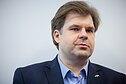
At the moment, members of the public in Lithuania do not know what to do in case of war, according to Saulius Pečeliūnas, a signatory of Lithuania’s Act of Independence.
“If war broke out tomorrow, there would be chaos and countless casualties, just like in Ukraine at the beginning when people were shooting at each other, and there would be zero organisation,” he said.
“We have been communicating for years – everything has to be [prepared], but so far we have no results, apart from a few prepared documents, we have practically nothing,” Pečeliūnas added.
Almost a year ago, the Lithuanian parliament, Seimas, adopted a resolution approving the Strategy for Civil Resistance, but there is still no plan for its implementation, which was to be prepared by September 2022. According to the Defence Ministry, 3,000 people have attended a course on unarmed civil resistance in the past year.

Previously, Defence Minister Arvydas Anušauskas, as well as lawmakers, emphasised the role of the Riflemen’s Union in running civil defence courses. But according to the leadership of the paramilitary group overseen by the government, officials are merely trying to pass over the responsibility to the group that currently has over 10,000 members.
“Passing the buck to the Riflemen’s Union [...] is the easiest thing to do,” said Lieutenant Colonel Linas Idzelis, commander of the group. “But homeland defence is everybody’s business – not just for the Riflemen’s Union.”
“It’s not as we might imagine that maybe we should organise a demonstration here, block the road for the Russians with cars there,” said Idzelis. “If you want to fight, you have to [be ready to] fight, because if you wave your fist and they answer with a heavy machine gun, you will be shot [which is] what we saw in Ukraine.”
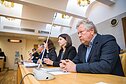
The stalling preparation to instruct Lithuanian citizens about civil resistance, both armed and unarmed, was recently discussed at a meeting of the parliamentary Committee on National Security and Defence (NSGK).
“We have not moved on from this – if 3,000 citizens who have taken a civil resistance course in a year is a lot, how many years will it take for the whole society to hear about it? It’s at least a few hundred years,” said MP Jonas Jarutis, member of the NSGK.
“What has been done is inexcusable. Nothing has been done in almost one year since our committee raised this issue and adopted the resistance strategy. Neither by the Ministry of Defence nor the Ministry of Education,” he added.
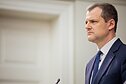
Deputy Defence Minister Žilvinas Tomkus disagrees that the development of the plan has been slow solely because of the Defence Ministry.

“Not only the national defence system was involved in the preparation of the plan, but also other state institutions that would contribute to preparing citizens for civil resistance,” he said. “There were a lot of discussions on the implementation of the measures themselves, we discussed the criteria, how we would measure preparedness, and that is why the process itself took a bit longer than planned.”
According to him, the main focus is on professional soldiers and conscripts, ie those who have a duty to defend the country.
“Those who do not have an obligation, when day X happens, you cannot guarantee that those [civilian] people will actually come and contribute to the defence of the country,” said Tomkus.
Meanwhile, some members of the Seimas defence committee are calling for a change in thinking.
“We have to think today, that in two years, there will be war. When this comes into the heads of the state [leaders], then things will move along,” said MP Valdas Rakutis, member of the NSGK.

Newsletter
Every Friday morning.